A Homeowner's Guide to Spotting Electrical Panel Hazards
Your home's electrical panel is the main distribution point for every circuit in the house. It's a metal box that usually lives in a basement, garage, utility closet, or on an exterior wall. Most people walk past it without a second thought, but the panel contains breakers, fuses, and bus bars that carry the full electrical load of the property. A small issue inside the panel can lead to overheating, arcing, or even a fire. Knowing what to look for helps you stay ahead of trouble.
The goal is a safe electrical panel, one that meets current code, has no signs of damage, and operates without strain. You don't need to be an electrician to do a basic visual check. What follows is a straightforward list of things a homeowner can inspect safely, with the panel cover on, and without touching any live parts. If you see any of these warning signs, the next step is to call a qualified professional.
Check the panel cover and door
The cover should sit flush and close firmly. A gap, a missing screw, or a cover that won't stay shut can let dust, moisture, or pests inside. Debris inside the panel can cause a ground fault or arc fault. If the cover is damaged or does not fit properly, it should be replaced or repaired. On the same note, make sure the area around the panel is clear. Boxes, stored items, or clutter within three feet of the panel are a code violation and block quick access during an emergency. Keep that space open.
Look for burn marks, discoloration, or rust
Open the panel door (but leave the metal cover in place) and look at the front of the breakers and the panel surface. Dark spots, scorch marks, or a yellow or brown tint near a breaker slot suggest heat damage. Rust around the panel edge or on the door can mean moisture is getting in. Moisture inside the panel corrodes connections and compromises grounding. If you see any of these, do not flip the affected breaker. Have a professional evaluate the panel.
Feel for warmth on the panel surface
Place your hand flat against the panel door or cover. It should feel at or near room temperature. If the panel feels warm to the touch, especially in one spot, that indicates an overcurrent condition or a loose connection inside. Loose connections generate heat because the current has to jump a gap, creating resistance. A warm panel is a red flag. Turn off any heavy loads that might be running (like the air conditioner or dryer) and see if the warmth subsides. If it doesn't, call an electrician.
Listen for buzzing, crackling, or humming
A safe electrical panel is quiet. If you hear a steady hum, that might be normal for an older transformer or a large breaker. But a buzzing or crackling sound suggests arcing. Arc faults happen when electricity jumps across a gap in a connection. That heat can ignite nearby insulation or wood. If you hear anything that sounds like frying or snapping, step away and contact a professional. Do not try to tighten anything yourself.
Inspect the breakers for easy switching
Each breaker should move smoothly between on and off. A breaker that feels stiff or grinds when you switch it may have internal damage. Breakers are designed to trip cleanly. If one feels wrong, it might not trip during a fault, leaving the circuit unprotected. Test this only with the breaker in the off position and your hand dry. If a breaker trips often, that is also a clue. Frequent tripping means the circuit is overloaded or the breaker itself is failing. Neither condition should be ignored.
Check for a missing or outdated panel label
Inside the panel door there should be a label or a diagram that tells you which breaker controls which area of the house. If the label is missing, faded, or inaccurate, that is a safety issue. In an emergency, you need to know which breaker to shut off without guessing. It also helps an electrician work safely. If your panel has no label, take the time to map the circuits and make a clear, permanent label. That is a simple task you can do with the power on and the panel closed.
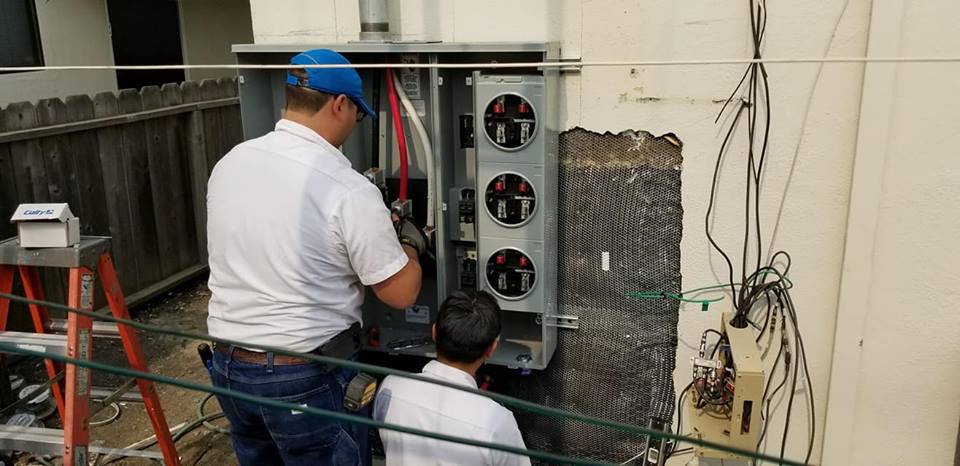
Look at the age and type of the panel
Electrical panels have a service life. A panel from the 1970s or earlier may use breakers that are no longer manufactured, or it may lack modern safety features such as arc-fault circuit interrupters (AFCIs) and ground-fault circuit interrupters (GFCIs). Some older panels were built with aluminum wiring or with breakers that have a known history of failing. If your panel is more than 30 years old, it is worth having it evaluated. The electrical code has changed significantly. A modern panel is built to handle the loads of today's homes and has better protection against arc faults and ground faults.
Notice double-tapped breakers
A double tap is when two wires are connected to a single breaker terminal that is designed for only one wire. This can happen when a previous owner or handyman added a circuit without installing a new breaker. Double taps create a loose connection, which leads to overheating. Look at the terminals on each breaker. You should see only one wire per screw. If you see two wires under one screw, that is a code violation and a hazard. It requires a professional to correct, usually by adding a new breaker or using a tandem breaker that is listed for two wires.
If any of these checks reveal a problem, the safest course is to have a licensed electrician inspect the panel. The phrase "a safe electrical panel" means more than just a box that hasn't caught fire yet. It means the panel is properly grounded, correctly sized for the home's load, free of damage, and up to code. Many homes in the Bay Area have older panels that were never updated to handle modern electronics and appliances. A professional evaluation can catch issues before they become emergencies.
For homeowners in San Jose and nearby communities, woodingelectric.com provides evaluations, replacements, and upgrades for electrical panels. If your panel shows any of the signs described here, or if it is simply old and you want peace of mind, having a professional look at it is a wise investment. A safe electrical panel protects your home, your family, and your appliances. It is one of those things you rarely think about, until something goes wrong. A quick visual check once a year can help you catch small issues early. And when a professional is needed, make sure you choose someone who understands local codes and the specific conditions of older Bay Area homes. woodingelectric.com is one resource for that kind of service, but the important thing is to have the work done right, by someone qualified.
Remember that the electrical panel is not a place for DIY repairs. The checks described here are all visual or very low-touch, done with the cover on and without removing any screws or panels. If you ever feel unsure about what you are seeing, or if you find evidence of damage, stop and call a pro. The cost of a service call is small compared to the cost of a fire or an injury. A safe electrical panel is a quiet, unremarkable part of a home. It does its job without drawing attention. That is exactly how it should be.
Ends · HOMELOADGUIDE